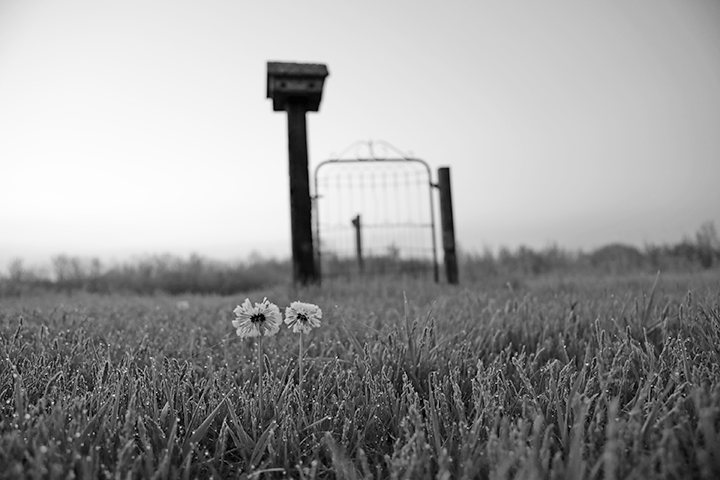
“How can 2024 be any worse than 2023?”
Every time we talk, which has become more and more this past year, my brother and I juggle that question back and forth. “How can 2024 be any worse than 2023?” I will return to last year’s events in a couple of weeks, as it is a part of this story.
As usual, we were wrong, January 2024 became another unexpected and unwelcome chapter.
That being said, it’s true what they say, “Man plans, and God laughs.”
From the moment I contacted Dr. Rakshit’s office about my vertigo in late December, January events were set into motion at an unmatched speed. I’m going to try and make sense of the blur.
To see what was going on in my brain required another MRI. The last MRI in August showed no new evidence of metastatic disease. That was great news. It was eye-opening for me to spend time looking up unfamiliar words associated with unfamiliar tests. Metastatic is not a word you want to see in any results or doctor’s notes.
My November 20 CT scan showed no evidence of metastatic disease. Of course, a CT test did not include a brain scan.
When I saw Dr. Reynolds for a regular check-in in December, he said, “And, your brain looks normal.”
To which I replied, “No one has ever accused me of having a normal brain.” All was good. Christmas was coming and I was thrilled. I think we were all pleased with the outcome of the treatments earlier that year. By the end of December however, something had changed. In a matter of one day I went from feeling fine to having vertigo, ringing in my ear and the feeling that my head was stuffed with cotton.
So, first to the walk-in clinic, then to my primary care physician and finally I thought to contact my oncologist. The next step was the MRI.
As you may know, test results are provided to patients through an online portal hours before you have a chance to talk to your doctor. I’m not sure it’s a good thing. The results of the MRI in early January were not good news. If I was looking for some good news, the scan showed my inner ear was normal with no sign of fluid build-up, and my sinuses were clear. Lucky me.
The bad news — five tumors in my brain, possibly more. Tacked on to that sentence in the radiologist’s notes was that word again — metastasize. This time it wasn’t an adjective, it became a verb.
Dr. Rakshit and I discussed genetic testing, targeted therapy, and Mayo Clinic. He had already arranged an appointment with Dr. Reynolds at the Bismarck Cancer Center. Chemotherapy has a tough time breaking the blood-brain barrier and is not as effective as radiation. Dr. Rakshit wasted no time in arranging my treatment.
Once again, there was a mask involved in radiation. This one was different from the first one, not as large, but confining just the same. Appointments were scheduled for a week of radiation, maybe more.
Here we go again.
Before that week of treatment began, there are few words to explain what happened next. Trust me, when someone tells you how amazing the Mayo Clinic staff is, believe them. I was also impressed with the efficiency of my local care-givers.
1. The tumor biopsy was shipped out that very day for a genetic test. (There’s no explaining in my words what that test-result document said.) It was also a surprise to me that they kept those biopsies.
2. Someone from the Mayo Clinic read my history at 8:44 p.m. on January 4. Who works that late anymore? With that person’s recommendation I should see a Mayo doctor face-to-face before radiation in Bismarck began. By end of the week I spoke with several people over two days. There was a medical history, medications, and appointments. Questions asked, questions answered. I was assigned a patient number. There were documents, maps, and patient protocols delivered by email. It was overwhelming.
3. We left for Rochester, Minn., on January 8. I couldn’t drive because of my vertigo, so we split the trip and stayed in Fargo overnight. It was a blessing the weather cooperated, and the drive was uneventful. Heading towards the unknown, we packed for an open-ended stay at the Hilton.
4. Tuesday, January 9, involved routine blood tests and an initial intake.
5. Wednesday, January 10, began with an office visit with a new oncologist. It just so happened Dr. Rakshit trained under Dr. Kaushal Parikh, who called Dr. Rakshit by his first name. He was very positive they could help. Dr. Parikh ordered more blood tests and handed me a box for genetic testing.
6. That afternoon, I saw a neurological surgeon named Dr. Pollock. He was so excited about helping me that I was a little suspicious about his career choice. He asked if I wanted to see my brain scan, and I said, “No.” My husband expressed some concern about the tumor that was right next to my brain stem.
“Wasn’t that going to be dangerous?”
The doctor replied, “It will be just as dangerous for the tumor to grow.”
“It’s such a beautiful brain,” he said with an air of caution.
7. Following that appointment, I was sent to an appointment with a Dr. Routman, who would be assisting Dr. Pollock with the surgery. The process was seamless.
We checked into St. Mary’s Hospital at 5:30 a.m. Thursday, January 11.




 INDYchildrendotme
Leave a comment